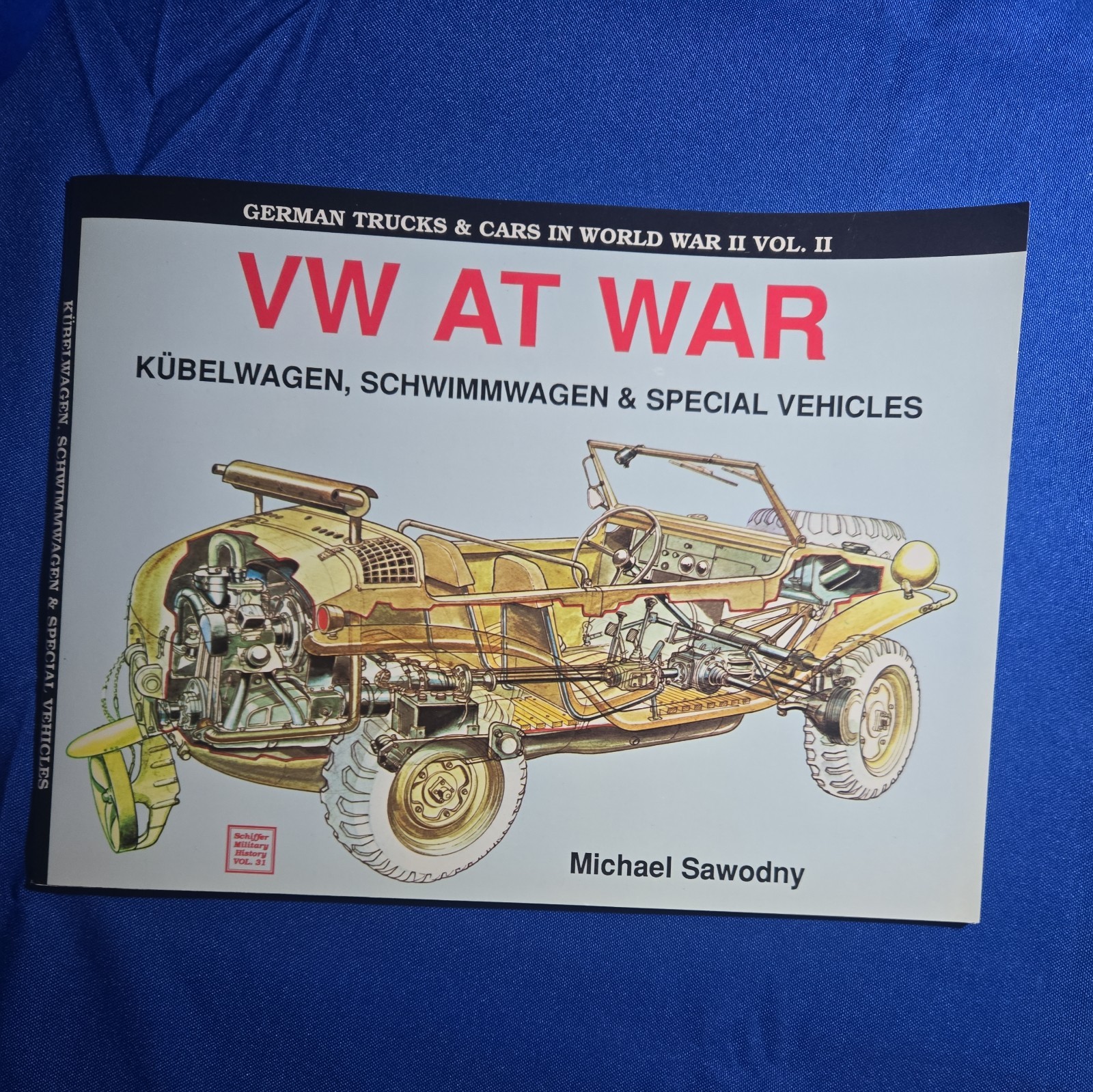

The Wehrmacht’s version of a jeep, the Kübelwagen
(literally: “bucket-seat car”) was designed and developed by Ferdinand Porsche
in 1938-39 and went into mass production in 1940. The inexpensive, lightweight,
durable transport vehicle featured a flat, smooth underbody, independent
suspension on all four wheels, and nearly a foot of ground clearance. It also
boasted a self-locking differential that limited slippage and retained traction
despite the fact that it lacked four-wheel drive. The Kübelwagen’s simple
engine was air cooled, so it lacked the vulnerabilities posed by a radiator and
proved capable of operating in both North African heat and the Russian winter.
More than 50,000 Kübelwagens were produced during WWII. In 1943, with the
collapse of Axis resistance in North Africa, some of these fell into American
hands. Shipped to the Aberdeen Proving Ground in Maryland, the vehicles were
put through a series of tests and evaluations, and generally dismissed as
inferior to the jeep in almost every respect. One outcome of the tests however
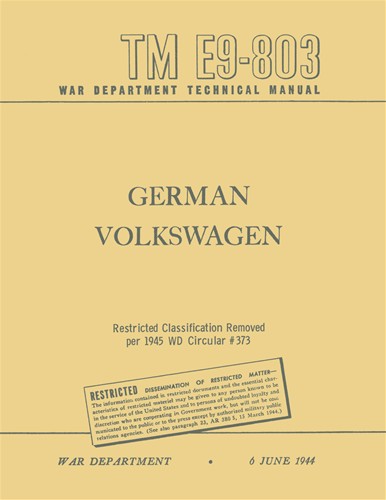
was the production of this technical manual, TM E9-803 “German Volkswagen”,
which was published in June of 1944. The manual was created with the specific
purpose of familiarizing U.S. personnel with captured Kübelwagens, and provides
information that could be used to make a lightly damaged vehicle, or one
abandoned due to a fuel or other technical problem, operational.
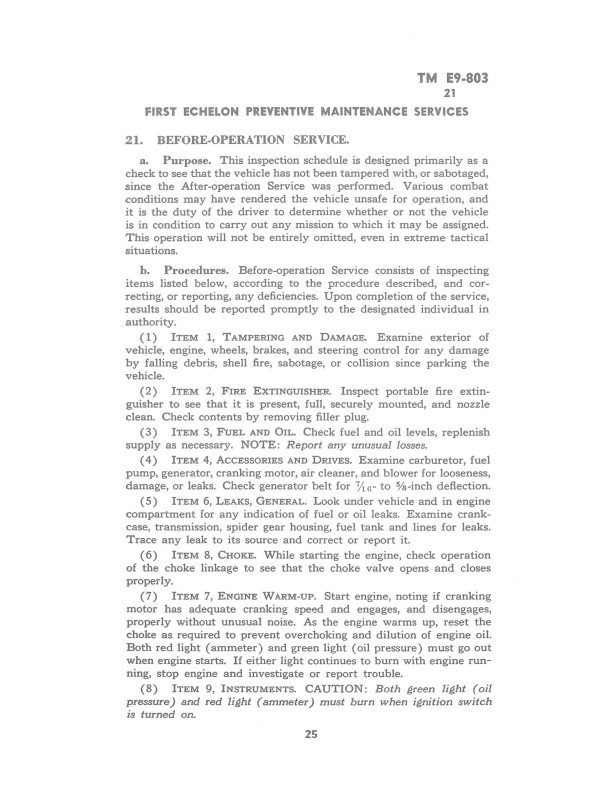
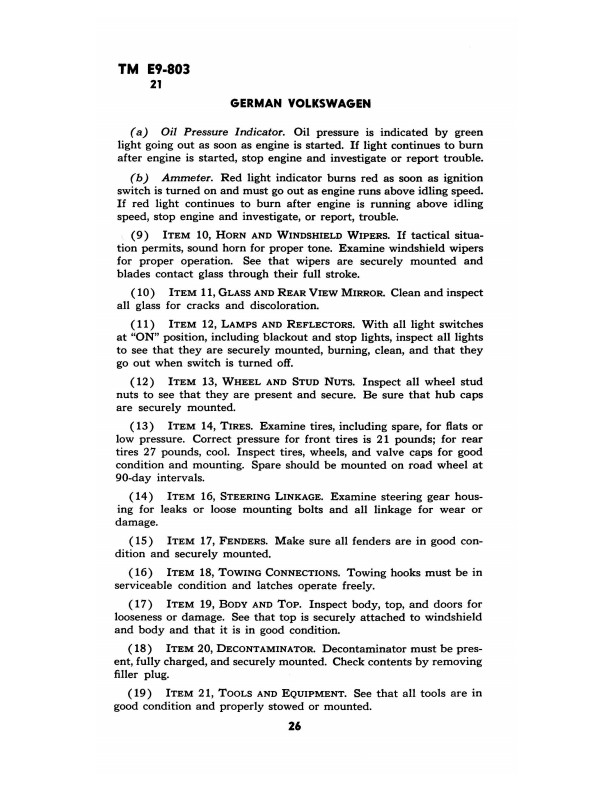
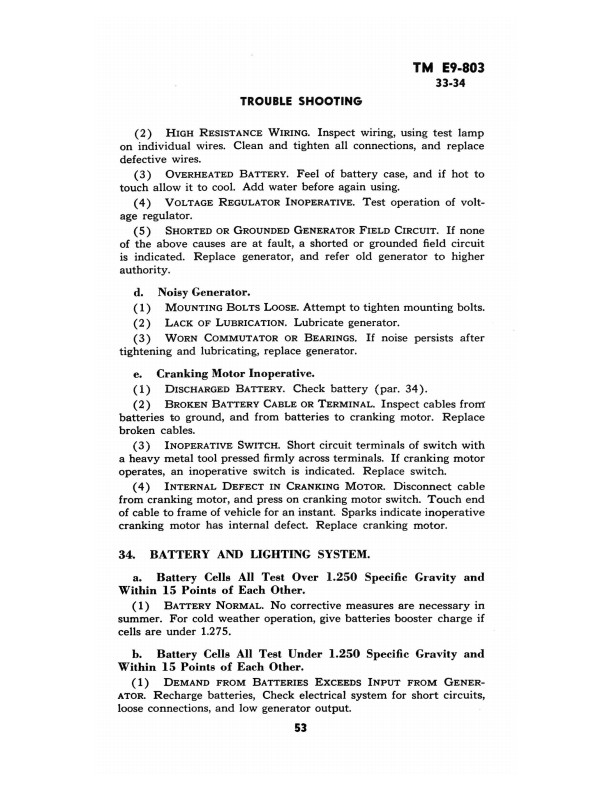
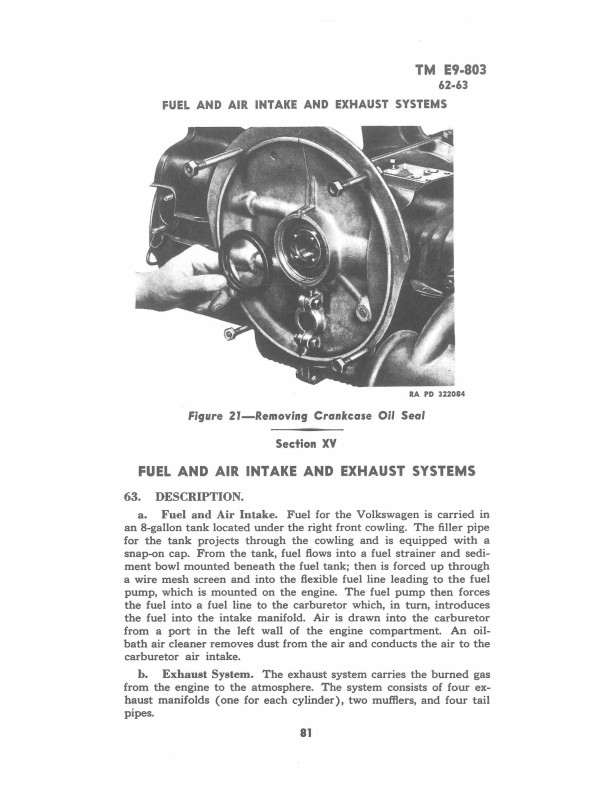
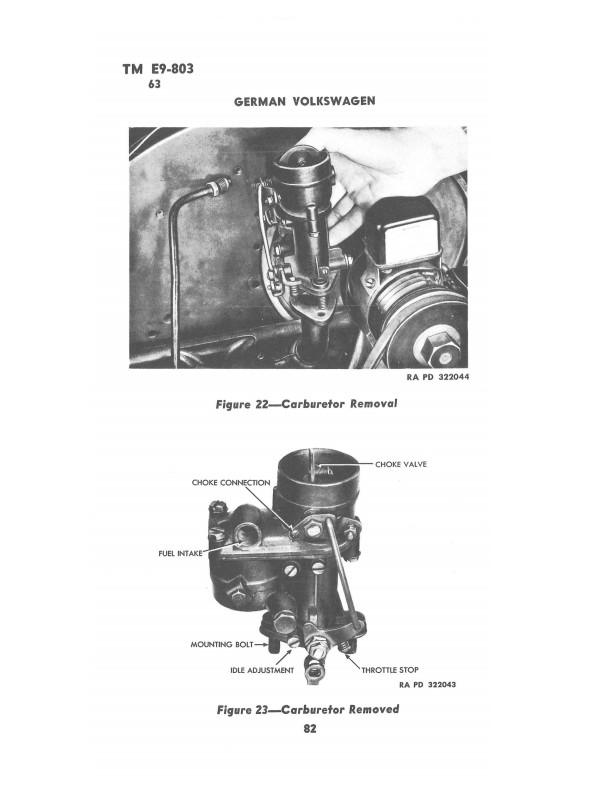
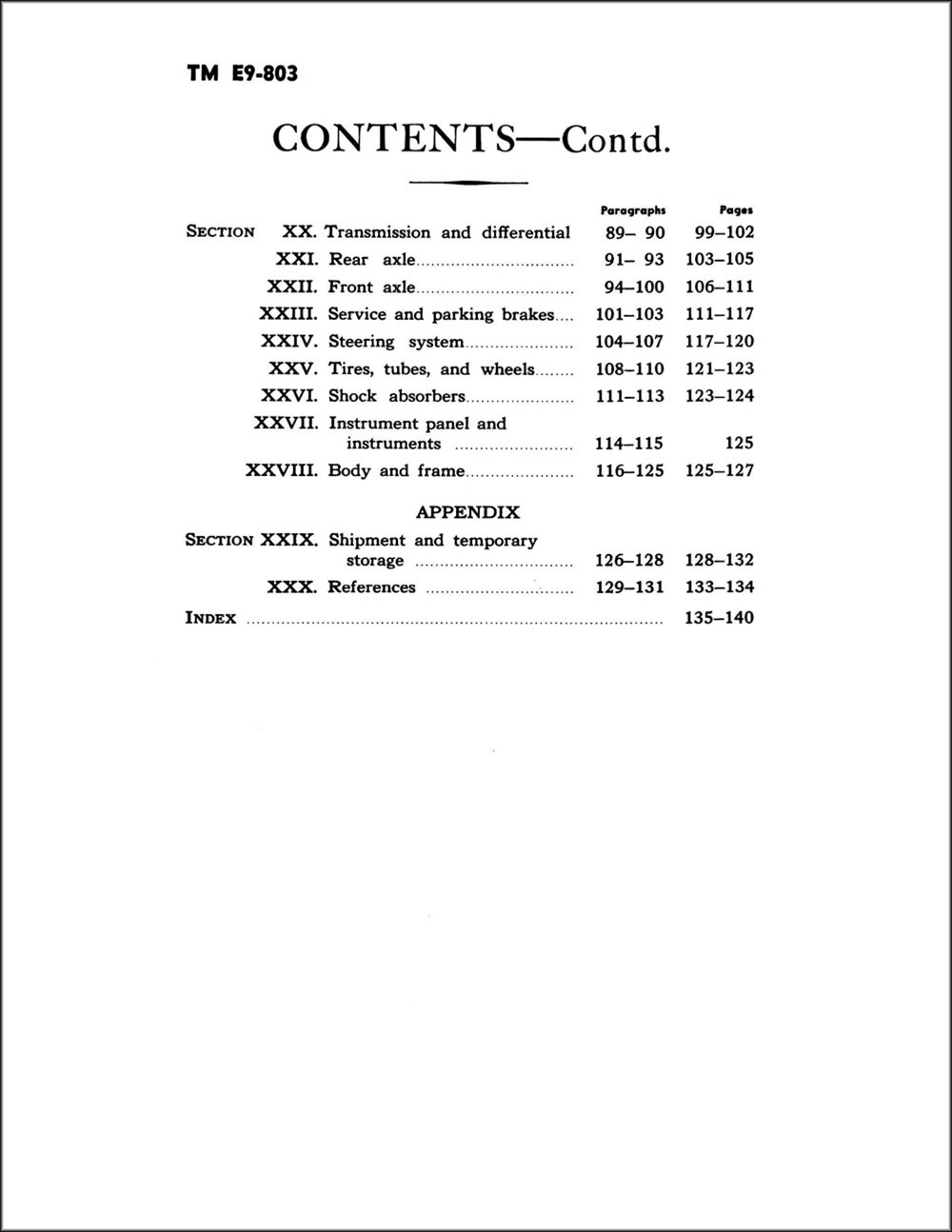
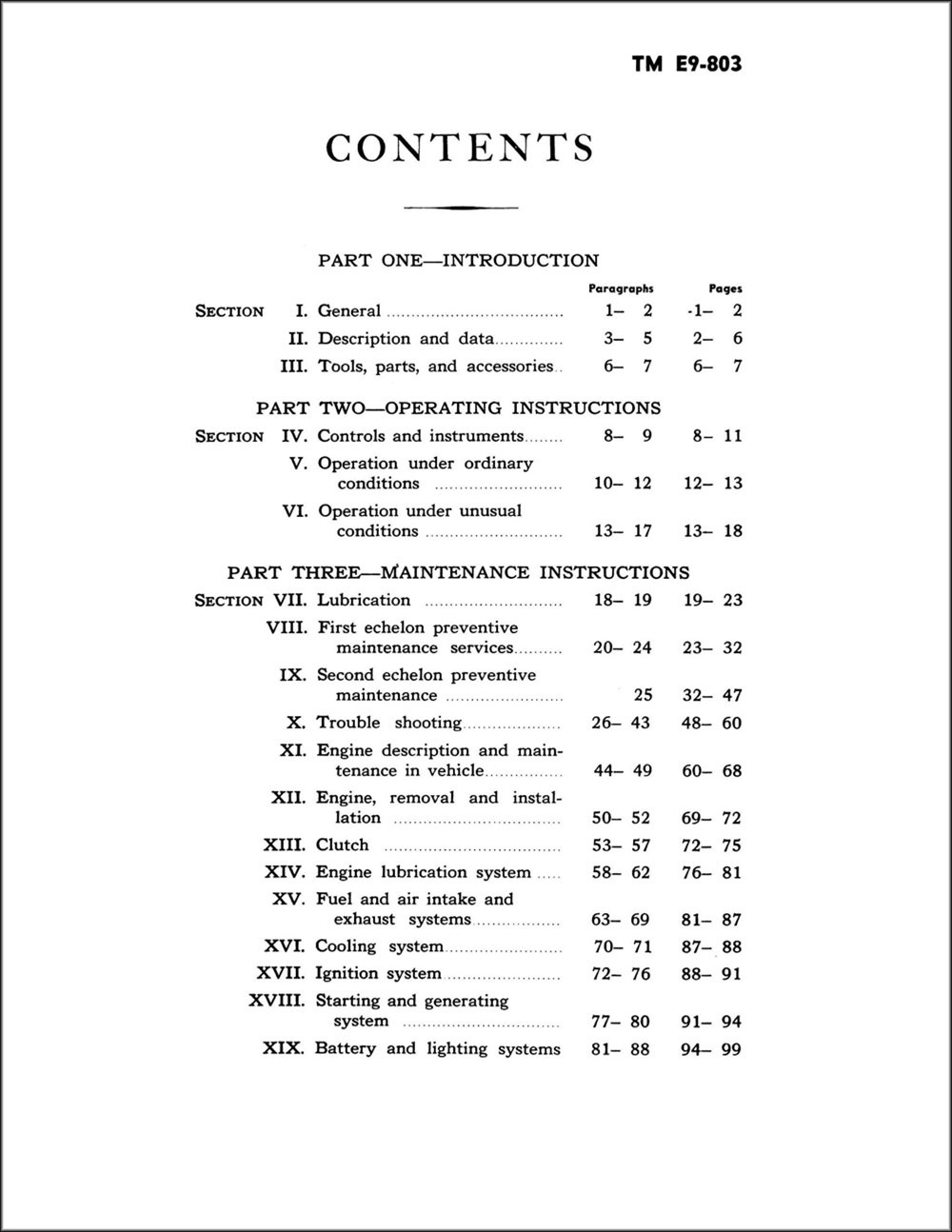
Recreated from an original copy of the U.S. Army Kübelwagen manual, this book
contains all the original text, photos and indexes, including operating
instructions and chapters on the vehicle’s engine, transmission, drivetrain,
battery and electrical system, and more.
From the introduction: "These instructions
are published for the information and guidance of the personnel to whom this
equipment is assigned. They contain information on the operation and
maintenance of the German Volkswagen as well as descriptions of the major units
and their functions in relation to the other components of the vehicle. .
.
(1) First part, Introduction, contains a description and
data. (2) The second part, operating instructions, contains instructions for
the operation of the vehicle, with the description and location of the controls
and instruments. (3) The third part, maintenance instructions, contains
necessary information for the performance of scheduled lubrication and
preventive maintenance services, and instructions for maintenance operations
that can normally be carried out by using organizations (first and second echelons).
(4) The appendix contains instructions for shipping and limited storage, and a
list of references that may provide useful information regarding operation or
maintenance."
You can be the first one to write a review.