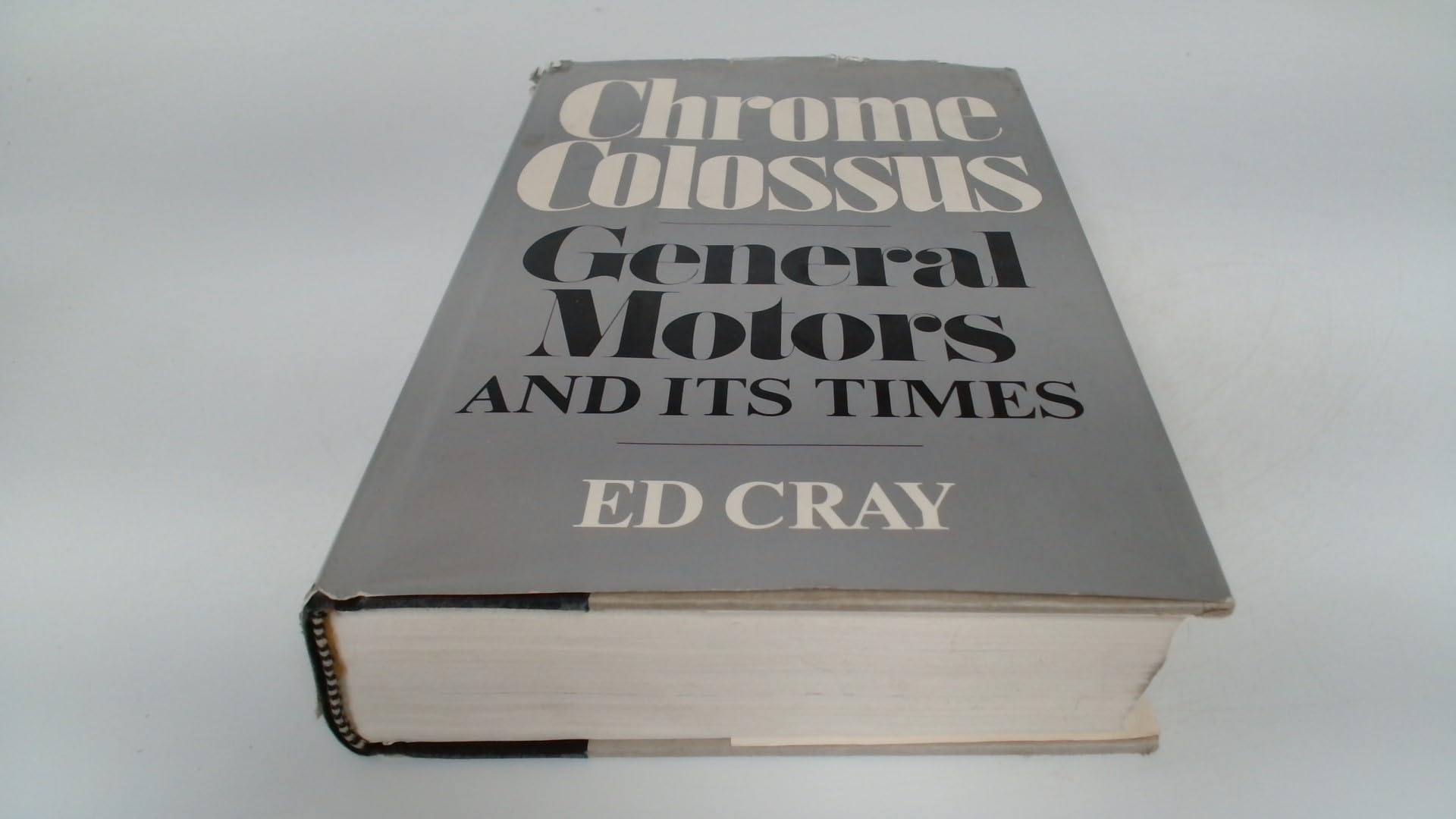

Explores the enormous influence General Motors has exerted on American values, culture, politics, and society over the past seventy years, focusing on the six strong-willed men who shaped the company and its fortunes. Published 1980.
Its foundation was the Buick Motor Company, named for the tinkering engineer David Dunbar Buick, but once Billy Durant - a businessman with experience in carriage building - got involved it would start to spread wings as an instrument of Wall Street types for issuing stock and making money. Durant would win and lose and win and lose control over the company as he built it up into a conglomerate of automobile divisions including Buick, Chevrolet, Pontiac, and Cadillac. Beginning just after the turn of the century, GM’s founding in 1908 was of a piece with the age of trusts. Businessmen were consolidating industries for the benefits that came from scale, and in the automobile industry’s case, a conglomerate of car brands helped to ensure that a single flop of a model, or weakness in a particular area of the market, would not lead to the company’s undoing, the way that it did for so many of the hundreds of automobile companies that were founded in the early 1900s.
This book is a history of General Motors beginning at the dawn of the automobile industry in Michigan with a description of some of the constituent makes that would eventually combine into the automobile company that would go on to become the largest of all American corporations.
Ed Cray, a journalist and prolific author, does a good job chronicling and sorting out all the financial wheelings and dealings that marked the first few years of General Motors history as stock was issued and sold and du Ponts and Morgans were tempted to buy and sell. Durant the founder had a fondness for finance but he attracted to himself the engineers and designers who made the technical and performance advancements that drove the early years of the auto industry. He recruited but also alienated the likes of Buick, Cadillac’s Henry Leland, and the race car driver Louis Chevrolet.
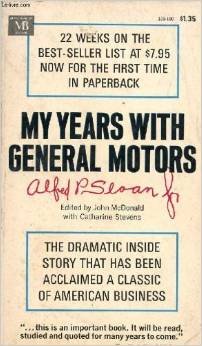
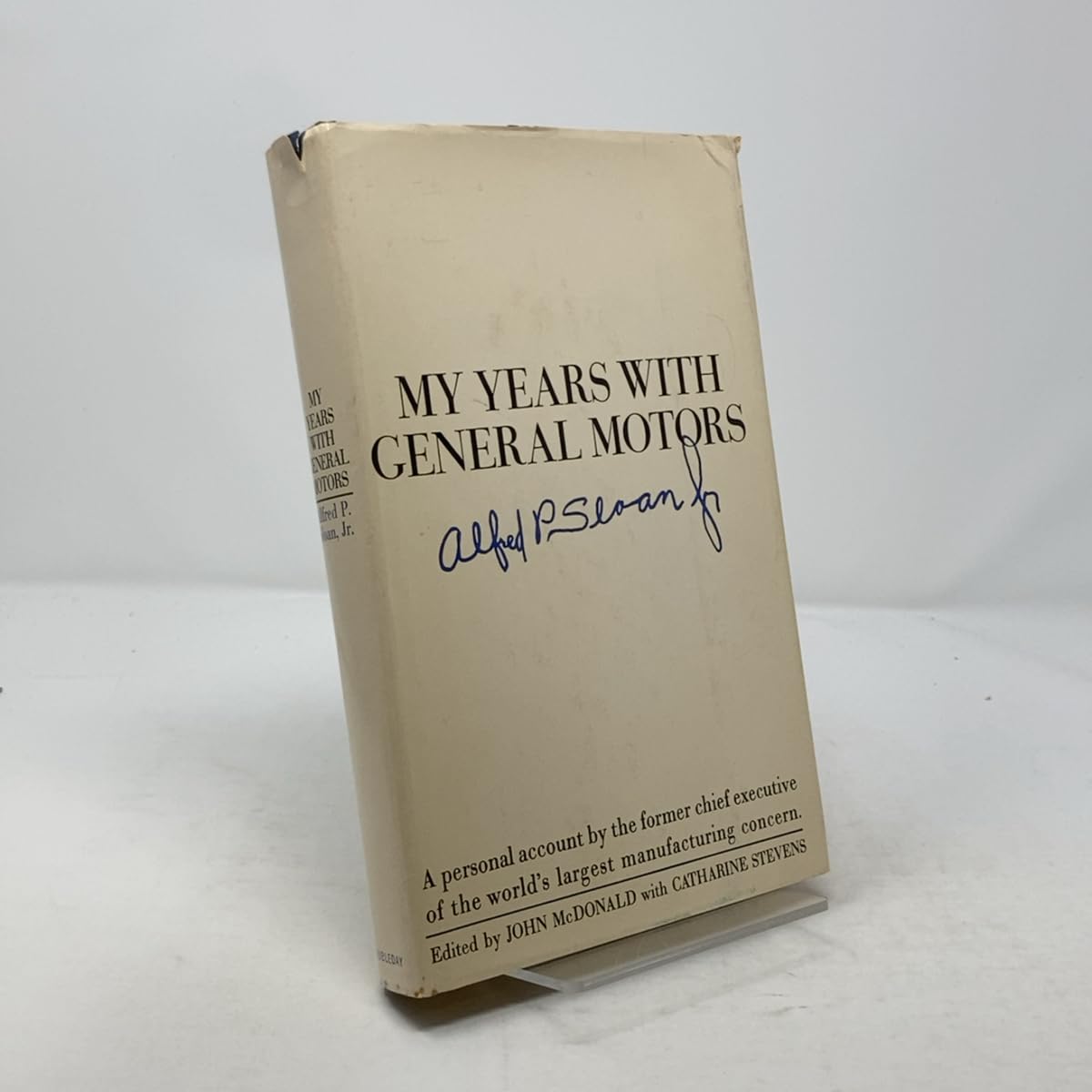
Cray provides mini-biographies of many of the key figures in GM’s history. There are engineers like Charles Kettering, whose patents greatly improved the early automobile but who also suffered defeats such as a faulty air-cooled engine that led to a massive recall and businessmen like Alfred P. Sloan Jr., the president of GM who invented the modern American corporate bureaucratic form that was adopted by nearly every other company and who conceived of the marketing strategy for GM of a car “for every purse and purpose.”
The book does not focus a lot on the cars. There are well-researched passages on the Corvair, a dangerous, flawed automobile, exposed by Ralph Nader, anecdotal accounts of design touches like the story of how the Buicks got their decorative fender portholes, and there is the tale of the creation of Pontiac as a brand. But the book spends pages and pages on all kinds of GM and auto-related history like the way WWI and WWII led to the company switching factories over to production of war material and the growth of the highway system in the 1950s. There’s lots of information about advertising and marketing and detailed descriptions of boardroom office politics. GM was always split between its headquarters in New York city and its headquarters in Detroit and this mirrored a split between executives who rose up through the financial areas of the company and executives who rose up through the automobile divisions.
The book charts the history of the automobile as it goes from a novelty for the rich to a necessary appliance for all. It covers issues like automobile safety, pollution, and corporate activism and social protest. There are descriptions of the role that time payments, styling, and planned obsolescence played in the history of the automobile and the role that the automobile played in the history of those trends.