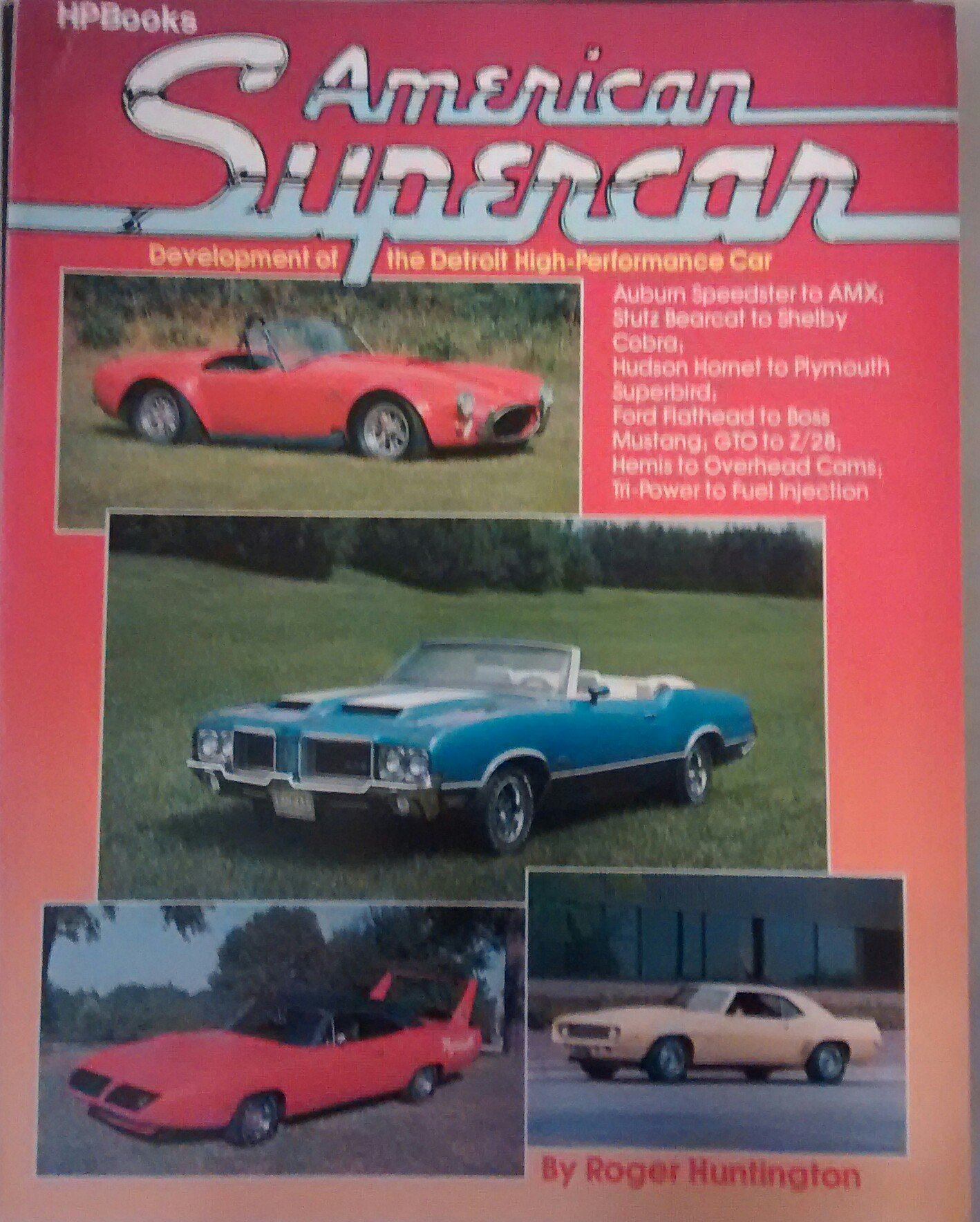

Published 1983
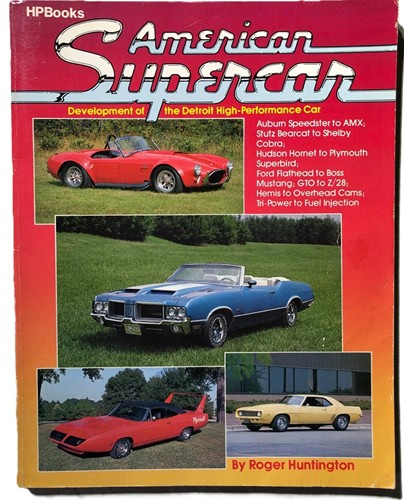
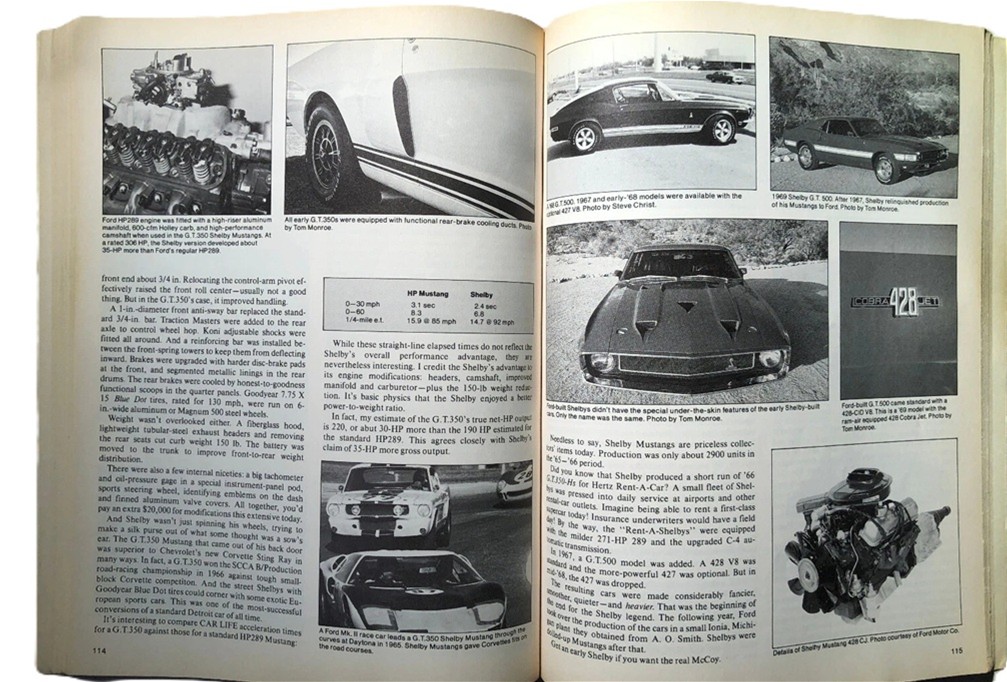
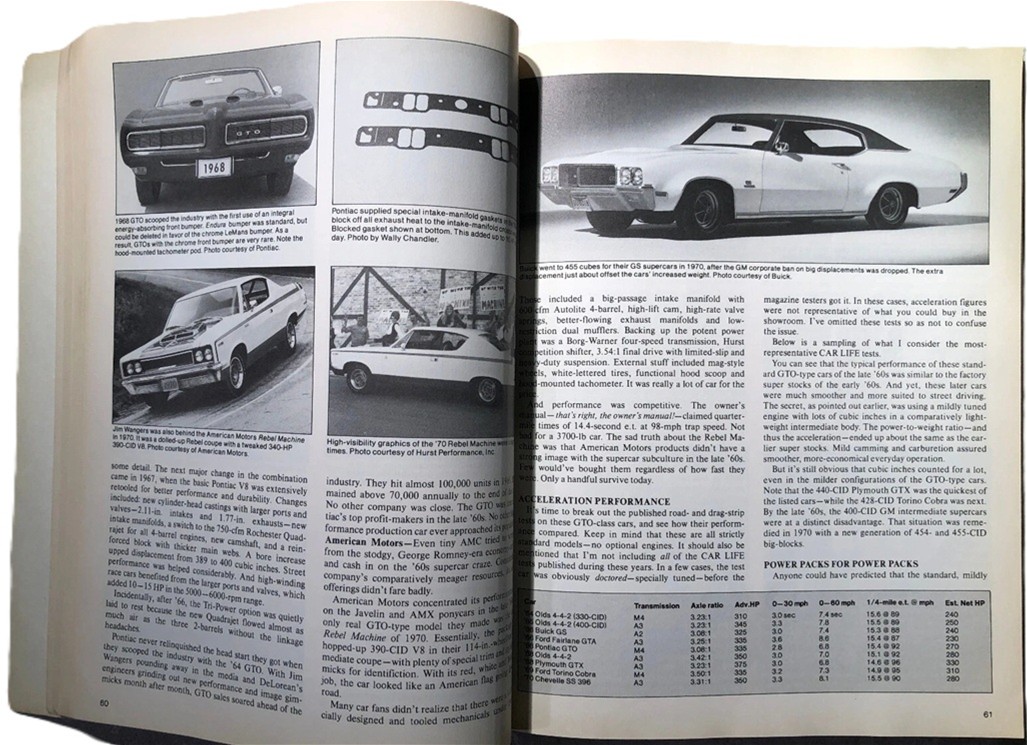
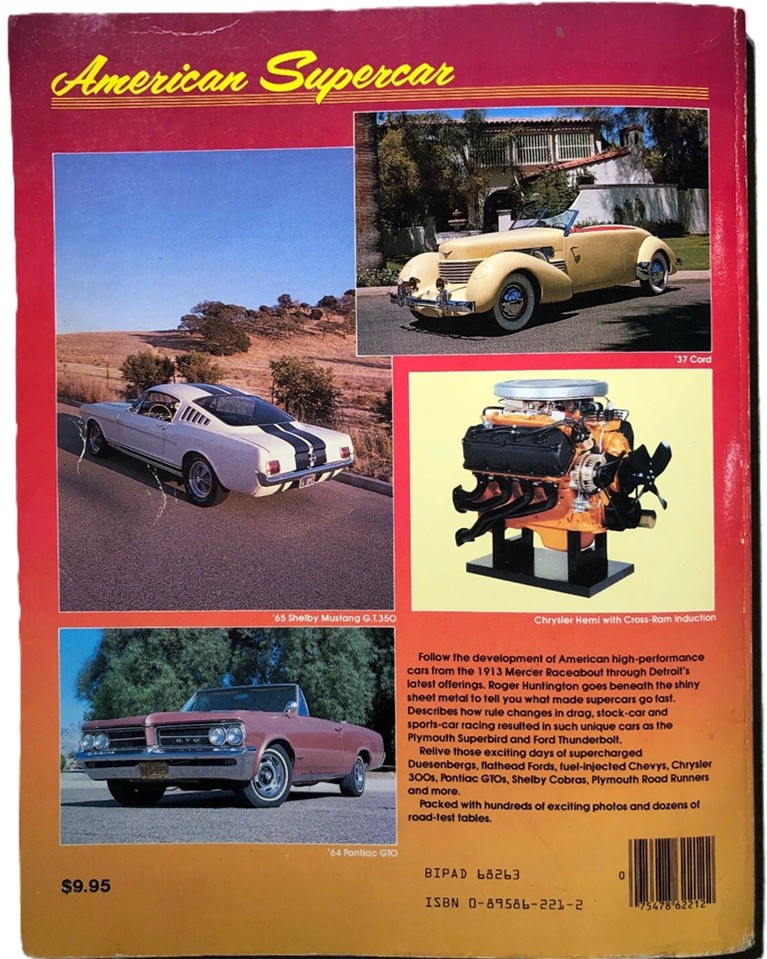
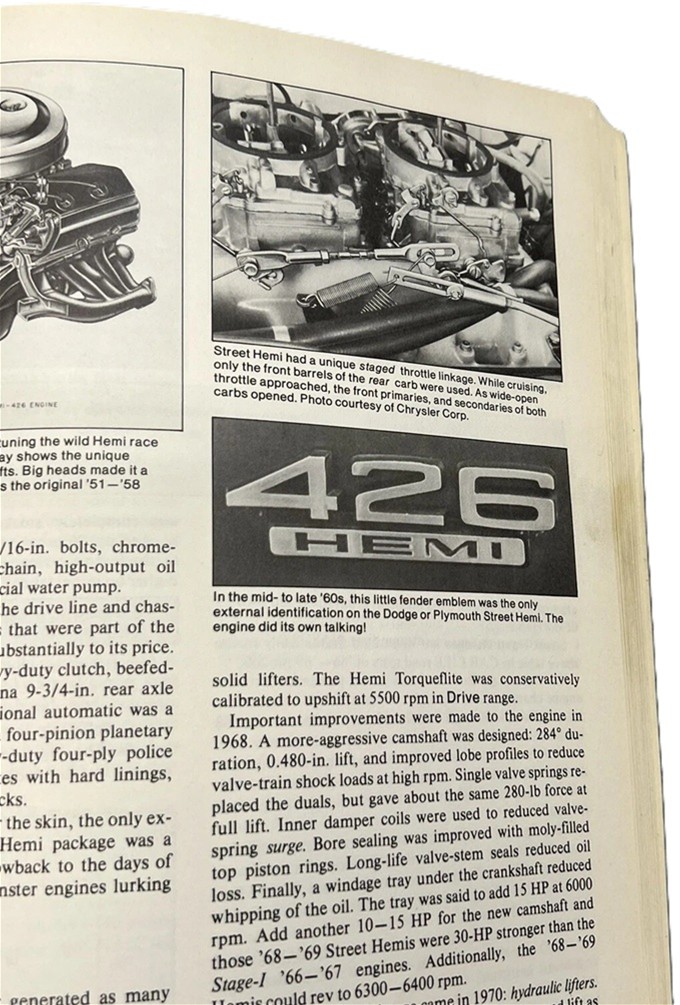
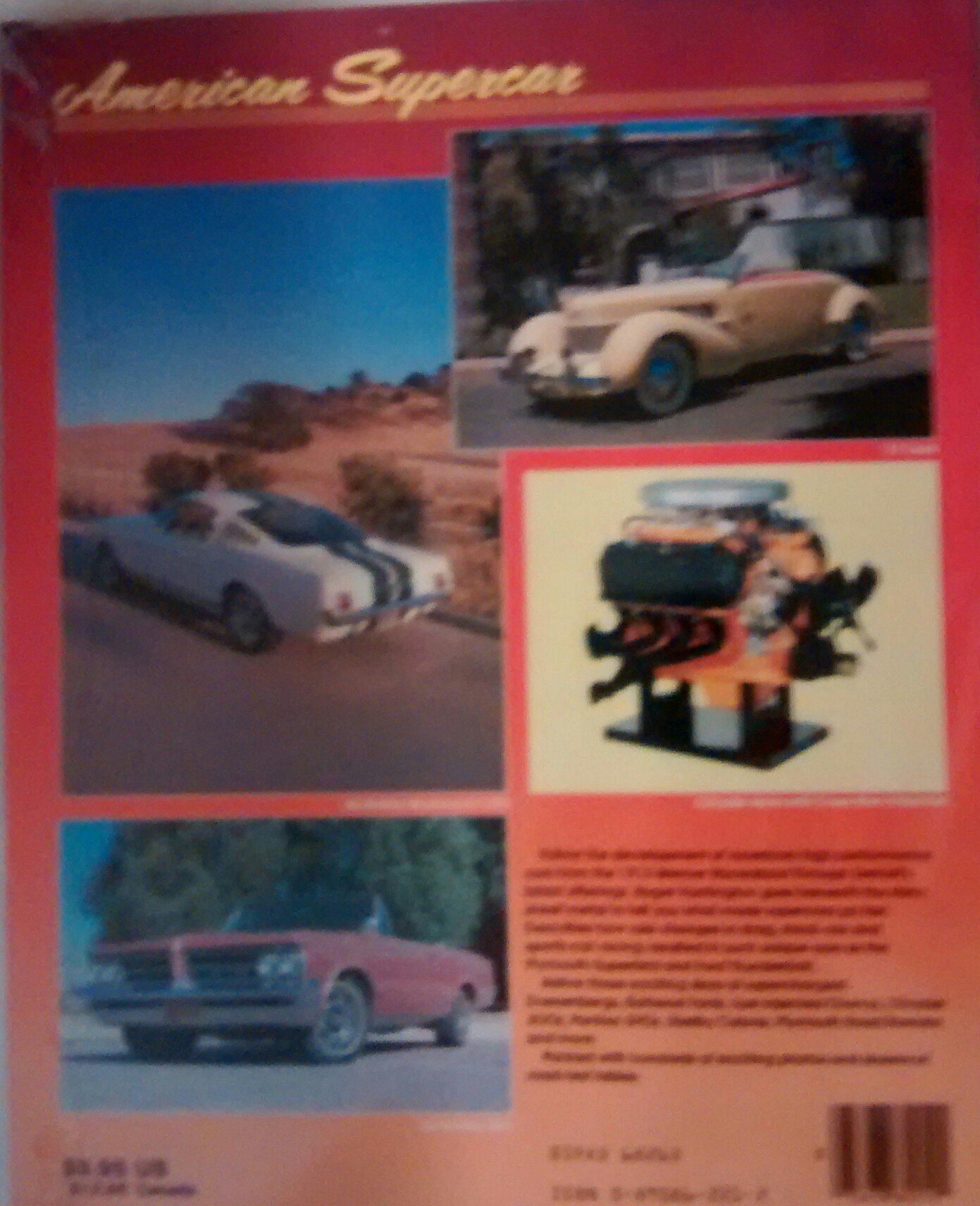
From the back cover: "Follow the development of
American high-performance cars from the 1913 Mercer Roceobout through Detroit's
latest offerings. Roger Huntington goes beneath the shiny sheet metal to tell
you what mode supercars go fast. Describes how rule changes in drag, stock-car
and sports-car racing resulted in such unique cars as the Plymouth Superbird
and Ford Thunderbolt. Relive those exciting days of supercharged Duesenbergs.
flathead Fords. fuel-Infected Chevys. Chrysler 300s, Pontiac GTOs. Shelby
Cobras. Plymouth Road Runners and more. Packed with hundreds of exciting
photos and dozens of rood-test tables. "
From the first page:
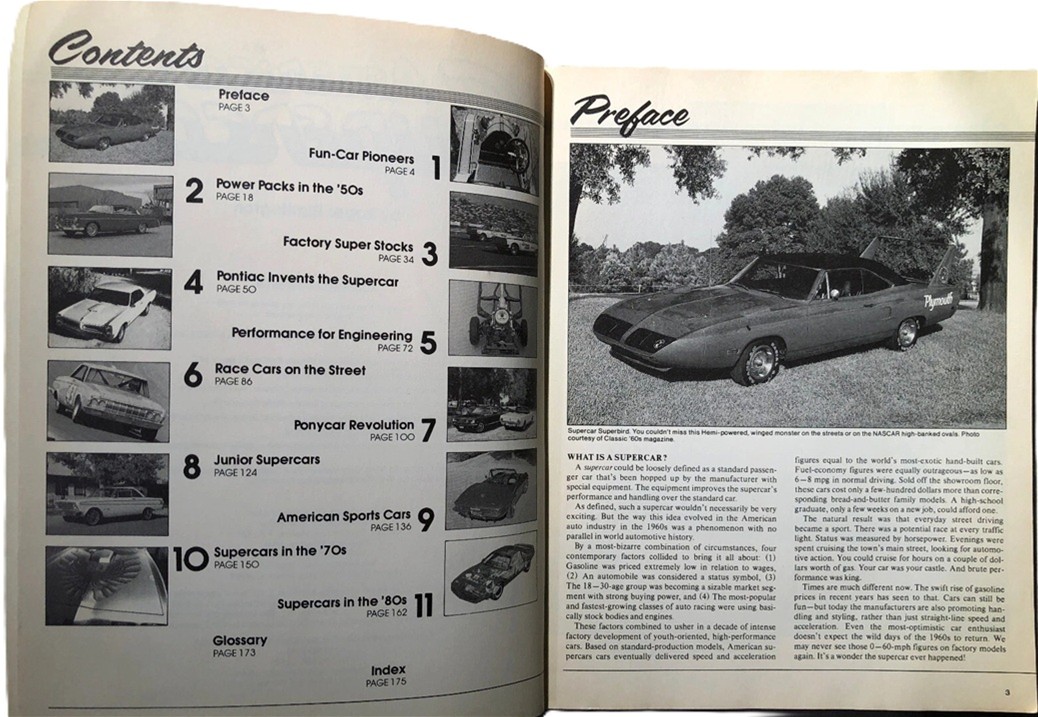
"WHAT IS A SUPERCAR?
A supercar could be loosely defined as a standard passenger
car that's been hopped up by the manufacturer with special equipment. The
equipment improves the supercar's performance and handling over the standard
car.
As defined, such a supercar wouldn't necessarily be very
exciting. But the way this idea evolved in the American auto industry in the
1960s was a phenomenon with no parallel in world automotive history.
By a most-bizarre combination of circumstances, four
contemporary factors collided to bring it all about: (1) Gasoline was priced
extremely low in relation to wages, (2) An automobile was considered a
status symbol, (3) The 18—30-age group was becoming a sizable market segment
with strong buying power, and (4) The most-popular and fastest-growing classes
of auto racing were using basically stock bodies and engines. These
factors combined to usher in a decade of intense factory development of
youth-oriented, high-performance cars. Based on standard-production models,
American supercars cars eventually delivered speed and
acceleration figures equal to the world's most-exotic hand-built cars.
Fuel-economy figures were equally outrageous-as low as 6-8
mpg in normal driving. Sold off the showroom floor, these cars cost only a
few-hundred dollars more than corresponding bread-and-butter family
models."